

What Are Oral Dissolvable Strips?
An oral dissolvable strip is a thin, flavoured film that carries a measured dose of a supplement and dissolves on the tongue in 7 to 30 seconds, with no water. Part of the dose is absorbed through the lining of the mouth, and the rest is swallowed with saliva and handled like any other supplement.
That is the whole format in two sentences. The rest of this page explains what the film is made of, what happens after it dissolves, where the format makes sense and where it does not. Smart Strips builds its range of ten formulas on this format, and we wrote this guide so you can judge it on clear information.

01
What is an oral dissolvable strip made of?
The base of most quality strips is pullulan, a polysaccharide made by fermenting food-grade starch with the microorganism Aureobasidium pullulans. In the EU it is an authorised food additive, E 1204, and EFSA’s 2025 re-evaluation found no safety concern for its current uses (European Commission, 2008; EFSA, 2025). When it is cast into a sheet and dried, pullulan forms a film that is flexible, almost transparent and dissolves quickly in saliva.
Into that film go the active ingredients, measured per strip, plus small amounts of flavouring and the components that keep the film supple. A strip holds a dose in milligrams and sometimes in micrograms. Pharmaceutical reviews describe oral films as small and lightweight, up to 500 mg for the whole film (Ferlak et al., 2023), and note that they are not generally suitable for treatments that need high doses (Scarpa et al., 2017). This single physical fact shapes everything that follows: which ingredients belong in a strip, and which do not.
Each Smart Strips oral dissolvable strip sits in its own sealed sachet. Pullulan films react to moisture, and an individual sachet protects every dose until the moment you open it. The sachet is light and compact and goes anywhere with you: a pocket, a bag, a gym bag. A box holds 30 strips.
02
How do oral dissolvable strips dissolve and absorb?
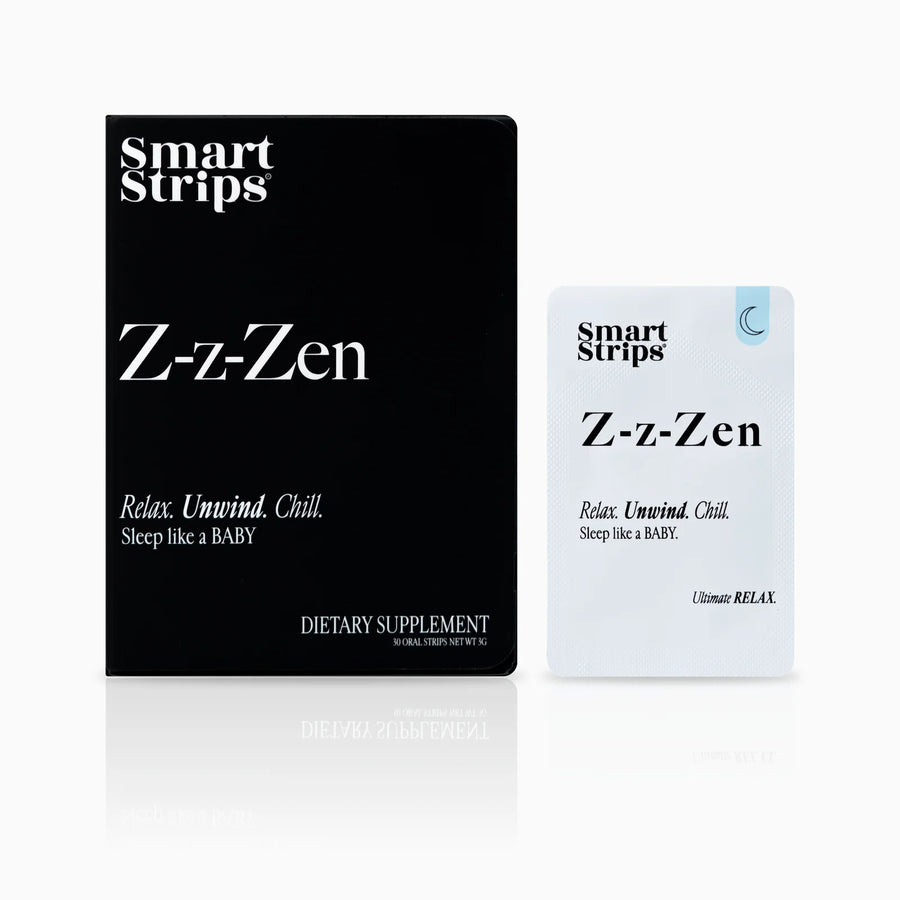
The strip softens the moment it touches the tongue and dissolves within 7 to 30 seconds. In a published laboratory test, pullulan-based oral films disintegrated in under 25 seconds (Gupta et al., 2023).
The role of the oral mucosa
The lining of the mouth is thin and, unlike skin, it is not keratinised. Under the tongue it measures roughly 100 to 200 micrometres (Hua, 2019), and a review of oral delivery describes the lining of the mouth as “4-4000 times more permeable than that of skin” (Patel et al., 2011). Some compounds can pass through it, which is why certain prescription medicines are placed under the tongue or against the cheek. That is a property of the route. How much of a given ingredient actually crosses it depends on the molecule.
Part of the dose, not all of it
A strip dissolves in saliva, and saliva gets swallowed. So part of the dose is absorbed through the mucosa and part of it travels the usual way, through the stomach and gut. Even in prescription buccal films, the swallowed share can be large: for one such film, about 51% of the dose was absorbed from the buccal mucosa and the remaining 49% was swallowed with saliva (ONSOLIS prescribing information). We prefer to say this plainly, because any brand that tells you a strip delivers “everything” straight into the blood is overstating it.
What first-pass metabolism means
Whatever you swallow is absorbed from the gut and passes through the liver before it reaches the rest of the body. The liver breaks down part of many compounds on that first pass. Melatonin is a well-known example: swallowed melatonin tablets show an absolute bioavailability of approximately 15% (DeMuro et al., 2000).
The portion of a strip that is absorbed through the oral mucosa does not take that route first, so for that portion, first-pass metabolism in the liver is significantly reduced. This is the reasoning behind the format, and we sum up its advantage over a swallowed tablet in three figures: up to 95% bioavailability, up to 4x faster absorption and up to 30% higher effectiveness. How much a given ingredient gains depends on the molecule, the dose and the person. The mechanism, with numbered sources, is explained on our Science page.
03
What can oral strips do, and what can’t they?
Strips are a delivery format. They change how a dose is taken and, for part of that dose, how it is absorbed. They do not change what an ingredient is.
What the format does well: - delivers small, precise doses of ingredients that work at milligram levels, such as melatonin, caffeine, L-theanine or vitamin D3; - removes the need for water, a glass or a meal; - gives a single pre-measured dose in a sealed sachet, so you do not count, split or guess; - suits moments when swallowing a capsule is impractical: in a car, on a plane, at a desk between meetings.
What it cannot do: - carry gram-level doses. If you need 400 mg of magnesium or 1,000 mg of vitamin C, a tablet or a powder is the honest answer; - act as a medicine. Supplement strips are food supplements. They do not diagnose, treat or prevent any condition; - make an ingredient work faster in every case. Speed of uptake differs from compound to compound, and research has shown that for some ingredients a mouth-based route does not raise blood levels any faster than drinking them (McCarthy et al., 2025).
We cover the trade-offs between formats in detail in Oral Strips vs Pills, Capsules and Gummies.
04
Who are supplement strips convenient for?
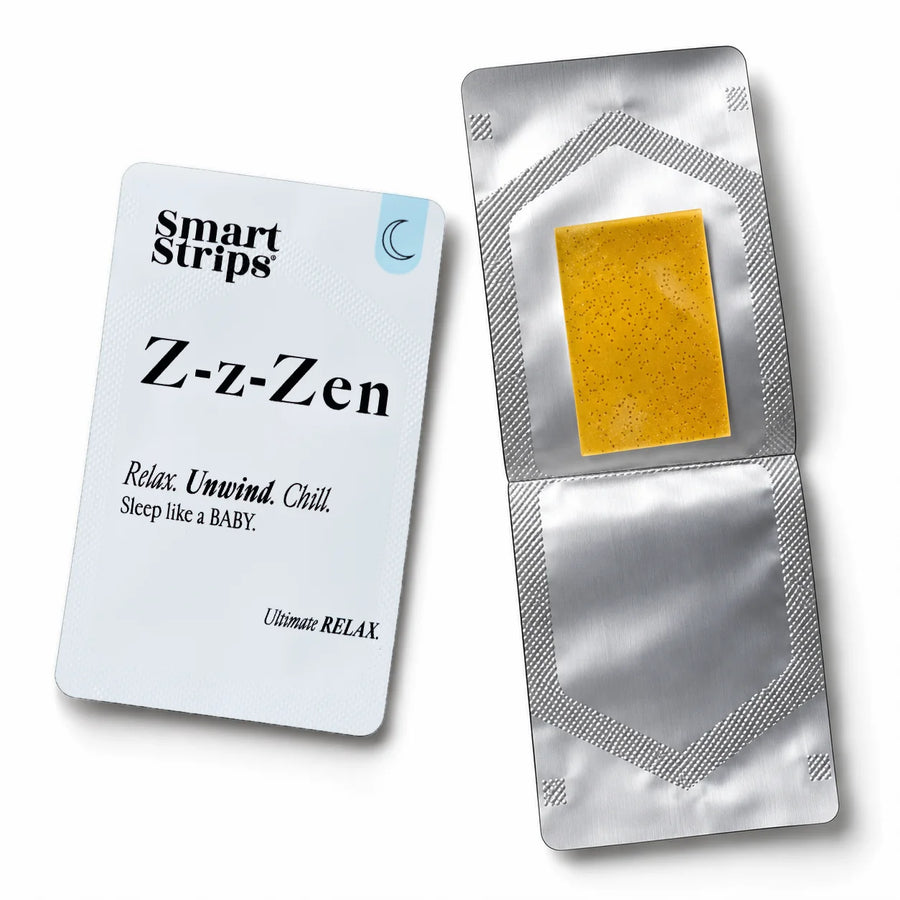
Mostly for people with full days and no wish to organise them around pills.
The person who keeps a sleep formula on the bedside table and does not want to get up for water at 11 at night. The commuter who takes a focus strip at a red light. The traveller who goes through airport security with a few sachets in a carry-on and nothing to declare. The person who trains before work and wants a pre-workout formula in a jacket pocket instead of a shaker in the gym bag.
There is also a quieter group: adults who find tablets and capsules hard to swallow. A systematic review puts the figure at about 14% of older adults living at home (Mc Gillicuddy et al., 2016). For them, a strip that dissolves on the tongue removes a small daily discomfort.
Consult your doctor if you are pregnant, nursing, taking medication or have a medical condition.
05
How do you take an oral dissolvable strip?
It takes a few seconds, and the steps are the same for every formula.
- Make sure your fingers are dry. Pullulan reacts to moisture and will stick to wet skin.
- Tear the sachet along the notch and take out the strip.
- Place it on your tongue.
- Let it dissolve, which takes 7 to 30 seconds. Do not chew it and do not swallow it whole.
- Wait until it has fully dissolved before you eat or drink.
Taking the strip out of the sachet and placing it on the tongue is what we call the 7-second ritual. The timing for each formula (before training, before sleep, in the morning) is on its product page and on the label. Do not exceed the recommended daily dose.

06
What should you look for when choosing supplement strips?
The category is young, and quality varies. Four checks will tell you most of what you need.
The label states mg per strip. Every active ingredient should be listed with its amount per strip, and vitamins and minerals with their %NRV (nutrient reference value). A list of ingredient names without amounts tells you nothing about the dose.
The dose makes sense for the ingredient. Melatonin at 1 mg or vitamin D3 at 35 µg is a meaningful strip dose. A strip that promises a full gram of anything does not add up.
Where and how it is made. Look for production in a registered facility that follows cGMP (current Good Manufacturing Practice). Smart Strips are made in the USA, in an FDA registered, cGMP certified facility. More on our Manufacturing page.
Individual sachets. A loose strip in a shared container is exposed to air and humidity every time the lid opens. A sealed sachet per strip protects the dose and makes it portable.
Two more details worth reading on the label: allergens (marine collagen, for example, comes from fish) and sugar. Smart Strips are sugar-free and gluten-free, sweetened with stevia. Our full ingredient list is on Our Ingredients.
07
Where did the strip format come from?
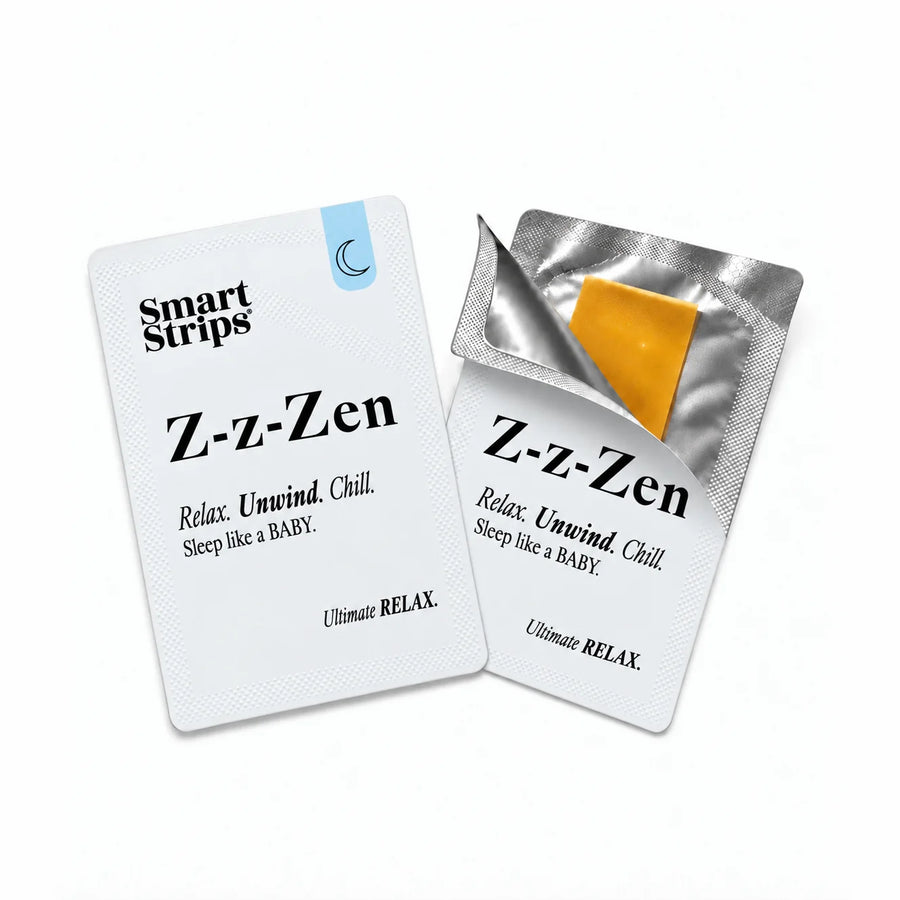
Many people first met oral films as breath-freshening strips: thin mint films that melt on the tongue and show, in a few seconds, that a film can disappear in the mouth.
Medicine took the format further. In July 2009 the US FDA approved a fentanyl buccal soluble film for pain (BioDelivery Sciences, 2009). In March 2010 an ondansetron orodispersible film for nausea was approved in 16 European countries (Manufacturing Chemist, 2010), and an ondansetron oral soluble film followed in the US in July 2010 (Drugs.com). Since then, oral films have been part of licensed medicine on both sides of the Atlantic, and the pharmaceutical literature on them is where most of what we know about absorption through the mouth comes from (Patel et al., 2011; Hua, 2019).
Supplements are the third chapter. The same technology now carries vitamins, amino acids and botanical extracts at doses suited to a film. Smart Strips approaches this chapter with QuickRelease™ (patent-pending), its own film technology, and with a view that the format deserves as much attention as the ingredients inside it.
08
The ten Smart Strips formulas
Each formula is built for a specific moment of the day, with doses chosen to fit a strip.
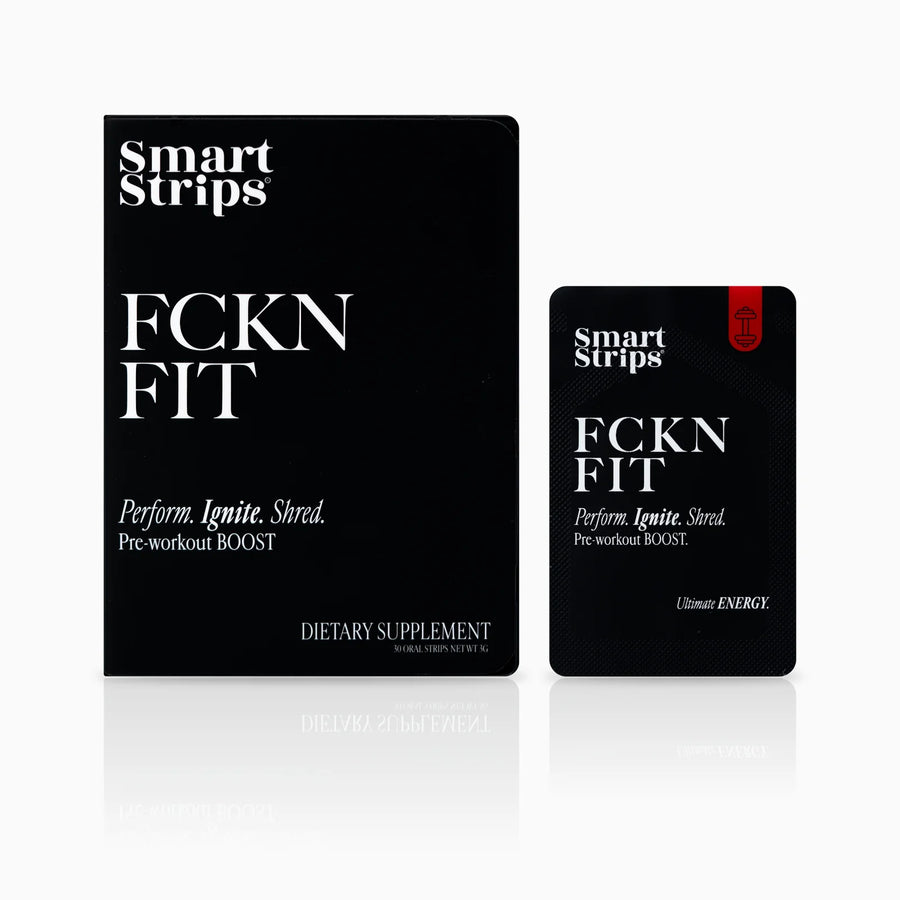
- FCKN FIT. Before training. L-carnitine, caffeine 20 mg, niacin, GBBgo, tamarind extract and chromium. Niacin contributes to the reduction of tiredness and fatigue. Felt within an hour.
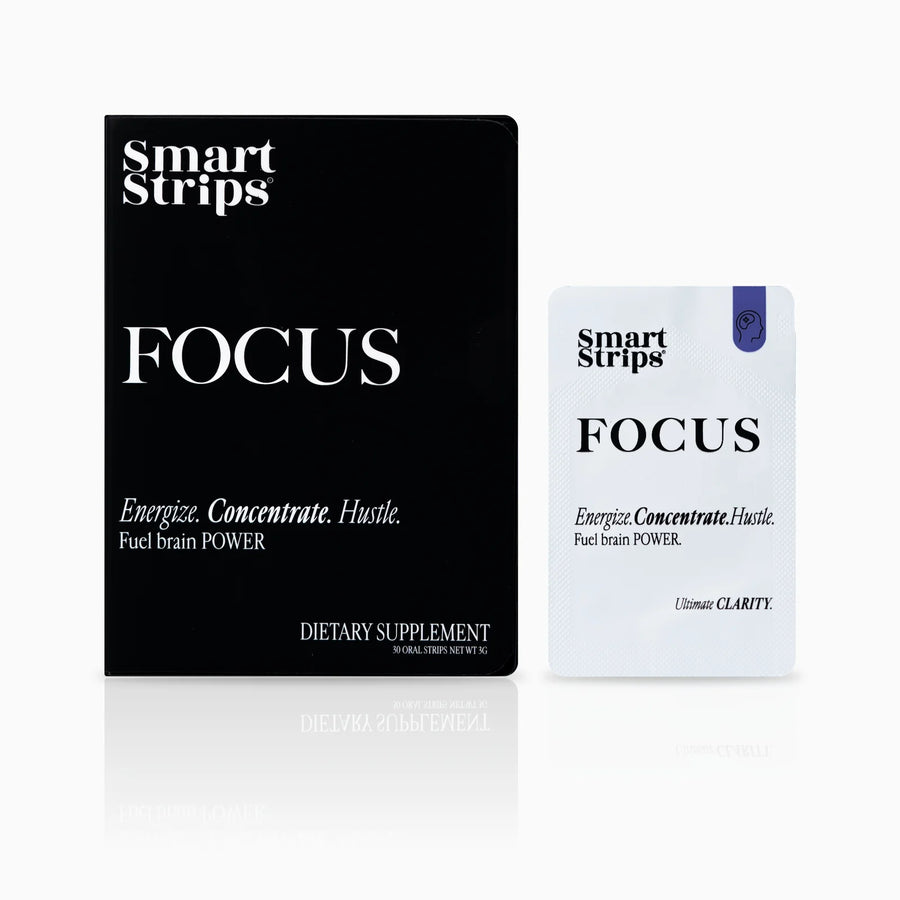
- FOCUS. For concentrated work. Alpha-GPC, caffeine 20 mg, L-theanine, citicoline and phosphatidylserine. Felt within an hour.
- Z-z-Zen. For the night. Saffron extract, L-glycine, L-theanine and melatonin 1 mg, for falling asleep more easily and staying asleep through the night. Melatonin contributes to the reduction of time taken to fall asleep; the beneficial effect is obtained by consuming 1 mg of melatonin close to bedtime.
- ANXIETY. For calm under pressure. L-theanine 20 mg, GABA 20 mg and saffron extract.
- REFUEL. After training. Liposomal curcumin, palmitoylethanolamide (PEA) and NAD+.
- IMMUNE. A daily habit. Vitamin C, elderberry juice concentrate and vitamin D3 35 µg. Vitamin C contributes to the normal function of the immune system. Vitamin D contributes to the normal function of the immune system.
- NMN. A daily longevity habit. NMN 80 mg per strip.
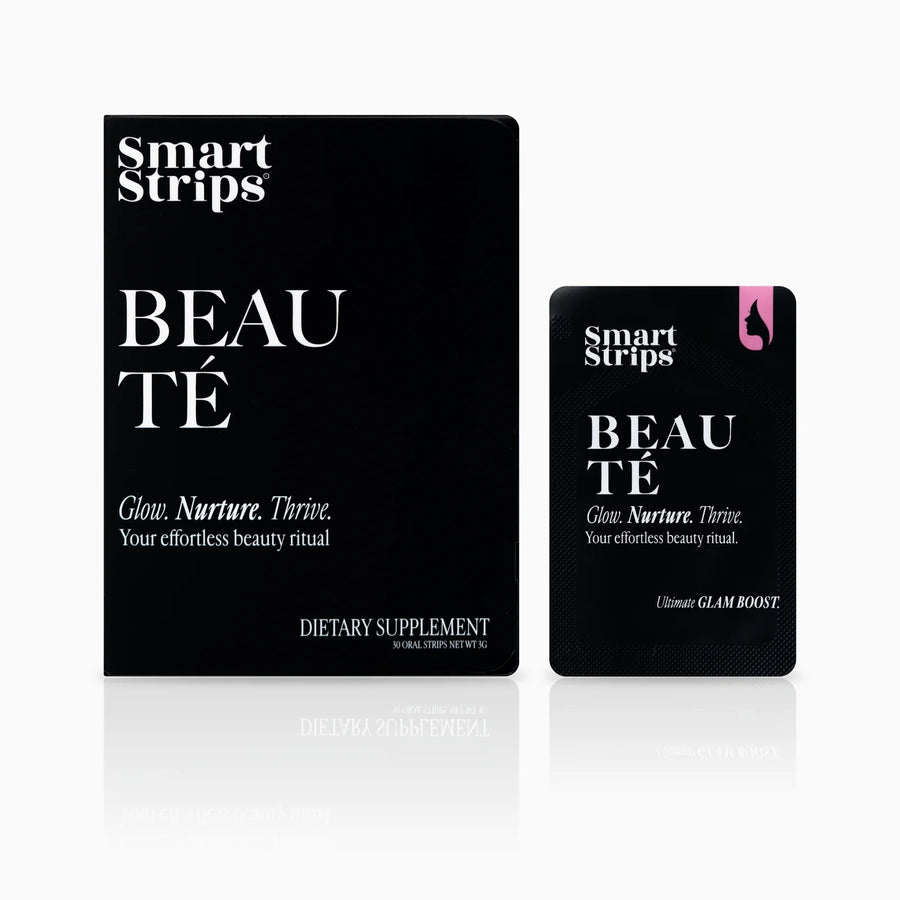
- BEAUTÉ. Skin, hair and nails. Hydrolysed marine collagen, hyaluronic acid, vitamins E and A, biotin. Biotin contributes to the maintenance of normal hair. Vitamin A contributes to the maintenance of normal skin. Contains fish.
- AFTR PARTY. The morning after. Tyrosine 80 mg and milk thistle. Felt within an hour.
- PLEASUREX. Libido and intimacy. Panax ginseng, Fo-Ti extract, L-arginine and L-citrulline.
IMMUNE and NMN are not formulas you feel; they are built to be taken every day, like brushing your teeth.
09
Frequently asked questions
What else are oral dissolvable strips called?
The same format goes by several names. Researchers and pharmacists call it an oral thin film (OTF), an orally dissolving film (ODF) or an orodispersible film. In stores and online you will also see oral strips, dissolvable strips, supplement strips and, informally, mouth strips. All of them describe a thin film that dissolves on the tongue. Smart Strips uses “oral dissolvable strips” because it says exactly what the strip does: it dissolves in the mouth in 7 to 30 seconds. Unlike pharmaceutical films, Smart Strips are food supplements, not medicines.
What is an oral dissolvable strip?
A thin film, usually made of pullulan, that holds a measured dose of a supplement and dissolves on the tongue in 7 to 30 seconds without water.
Are oral dissolvable strips the same as supplement strips?
Yes. “Supplement strips”, “oral strips”, “oral thin films” and “orally dissolving films” describe the same format. Smart Strips uses “oral dissolvable strip”.
Do supplement strips work?
They deliver the ingredients printed on the label. Part of the dose is absorbed through the oral mucosa and part is swallowed. How well a strip works depends on the ingredient and the dose, which is why the label should state mg per strip.
Do the ingredients go straight into the bloodstream?
No. Only the part absorbed through the lining of the mouth avoids the first pass through the liver. The rest is swallowed with saliva and absorbed through the gut.
What is pullulan?
A polysaccharide made by fermenting starch, authorised in the EU as food additive E 1204. It forms the film and dissolves quickly in saliva.
Can I take a strip with water or food?
You do not need water. Let the strip dissolve fully on your tongue first, then eat or drink as usual.
Can I take more than one Smart Strips formula a day?
Many people combine formulas for different moments, for example FOCUS in the morning and Z-z-Zen at night. Follow the dose on each label, and consult your doctor if you are pregnant, nursing, taking medication or have a medical condition.
Are Smart Strips vegan?
All formulas are vegan except BEAUTÉ, which contains marine collagen from fish.
Every formula is in one box of 30, in light, compact sachets that go wherever you do. When you are ready, choose the one that fits your day.
10
Sources
- Commission Directive 2008/84/EC laying down specific purity criteria on food additives other than colours and sweeteners, Annex I, E 1204 Pullulan. https://legislation.gov.uk/eudr/2008/84/annex/I/division/298/adopted
- EFSA Panel on Food Additives and Flavourings (FAF). Re-evaluation of pullulan (E 1204) as a food additive and new application for its extension of use. EFSA Journal. 2025, article 9267. https://efsa.europa.eu/en/efsajournal/pub/9267
- Ferlak J, Guzenda W, Osmałek T. Orodispersible Films: Current State of the Art, Limitations, Advances and Future Perspectives. Pharmaceutics. 2023;15(2):361. DOI 10.3390/pharmaceutics15020361
- Scarpa M, Stegemann S, Hsiao W-K, Pichler H, Gaisford S, Bresciani M, Paudel A. Orodispersible films: towards drug delivery in special populations. Int J Pharm. 2017;523(1):327-335. DOI 10.1016/j.ijpharm.2017.03.018
- Gupta MS, Kumar TP, Reddy D, et al. Development and Characterization of Pullulan-Based Orodispersible Films of Iron. Pharmaceutics. 2023;15(3):1027. DOI 10.3390/pharmaceutics15031027
- Hua S. Advances in nanoparticulate drug delivery approaches for sublingual and buccal administration. Front Pharmacol. 2019;10:1328. DOI 10.3389/fphar.2019.01328
- Patel VF, Liu F, Brown MB. Advances in oral transmucosal drug delivery. J Control Release. 2011;153(2):106-116. DOI 10.1016/j.jconrel.2011.01.027
- ONSOLIS (fentanyl buccal soluble film) US Prescribing Information, NDA 022266, 2021. https://www.accessdata.fda.gov/drugsatfda_docs/label/2021/022266s025lbl.pdf
- DeMuro RL, Nafziger AN, Blask DE, Menhinick AM, Bertino JS. The absolute bioavailability of oral melatonin. J Clin Pharmacol. 2000;40(7):781-784. DOI 10.1177/00912700022009422
- McCarthy DG, Stapleton RK, Handy RM, et al. Sublingual caffeine delivery via oral spray does not accelerate blood caffeine increase compared to ingestion of caffeinated beverages. Eur J Appl Physiol. 2025;125(7):2007-2013. DOI 10.1007/s00421-025-05735-z
- Mc Gillicuddy A, Crean AM, Sahm LJ. Older adults with difficulty swallowing oral medicines: a systematic review of the literature. Eur J Clin Pharmacol. 2016;72(2):141-151. DOI 10.1007/s00228-015-1979-8
- BioDelivery Sciences International. Press release on FDA approval of ONSOLIS (fentanyl buccal soluble film), 16 July 2009, filed with the US SEC. https://www.sec.gov/Archives/edgar/data/1103021/000119312509150170/dex991.htm
- Manufacturing Chemist. Ondansetron RapidFilm gains European approval, March 2010. https://www.manufacturingchemist.com/ondansetron-rapidfilm-gains-european-approval-50019
- Drugs.com. Zuplenz (ondansetron) oral soluble film, FDA approval history (first approved 2 July 2010). https://www.drugs.com/history/zuplenz.html
- Commission Regulation (EU) No 432/2012 establishing a list of permitted health claims made on foods (niacin, melatonin, vitamin C, vitamin D, biotin, vitamin A). https://www.legislation.gov.uk/eur/2012/432/annex
7 to 30s
To dissolve on the tongue
8×5cm
Sachet, business card size
30
Strips, one month
10
Formulas, one format


